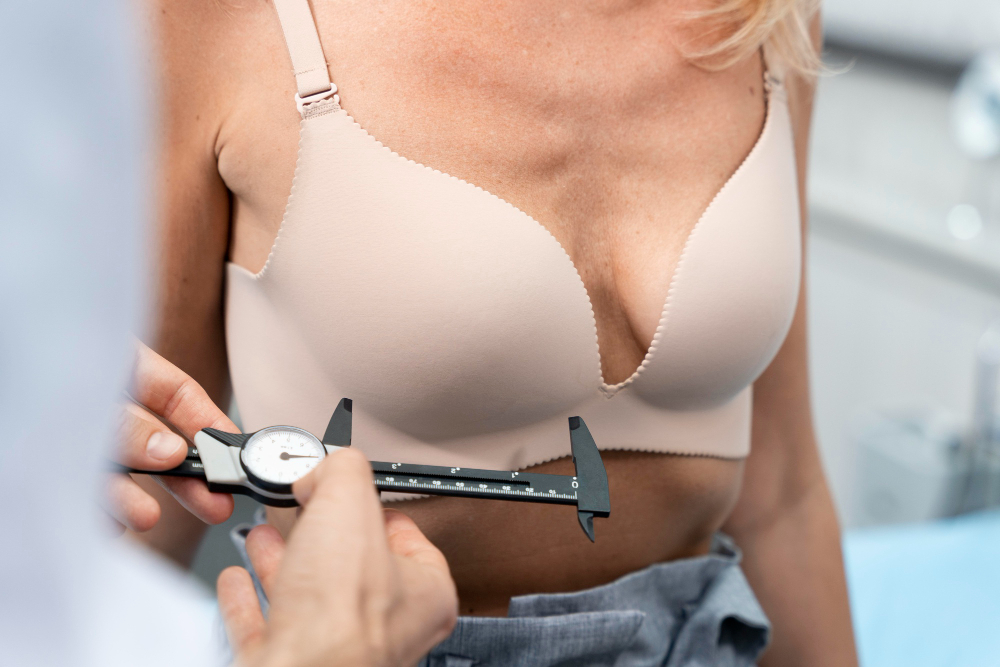
Tuberous Breast Deformity Correction
Tuberous breast deformity is a congenital malformation characterized by underdevelopment of the lower pole during breast development, constriction with band-like tissues, and protrusion of the breast tissue forward, forming a barrel-like shape. This condition involves not only volume deficiency but also shape deformity, asymmetry, areola enlargement, and the upward placement of the breast fold. Therefore, correction of tuberous breasts is one of the most planning-intensive and technically precise surgeries in breast surgery.Types of Tuberous Breast Deformity
The degree of deformity directly affects surgical planning:Type I
- Underdevelopment of the lower inner or lower outer quadrant
- Mild deformity
Type II
- Underdevelopment of the entire lower pole
- More pronounced nipple protrusion
Type III
- Complete restriction of the lower pole
- Excessive enlargement and herniation of the areola
- Significantly higher breast fold position
- Most severe deformity
Prominent Features of Tuberous Breast Deformity
- Underdevelopment of the lower breast pole
- Narrow breast base
- Protrusion of the breast tissue forward (tubular appearance)
- Wide and protruding areola
- Upward placement of the breast fold
- Volume deficiency
- Significant asymmetry
- Inability to achieve smooth form with clothing
Why Is It a Challenging Surgery?
Surgical Challenges
- Multiple anatomical problems must be corrected simultaneously
- The lower pole is restricted with tight bands and requires controlled release
- The tissue may be thin and have limited support capacity
- Implants alone are insufficient
- In some cases, a two-stage surgery may be required
Surgical Techniques
Lower Pole Release
- Tight bands are cut to widen the lower pole. This is the fundamental treatment for the deformity.
Parenchymal Plication / Internal Tissue Shaping
- The breast tissue is reshaped from the inside to provide structural support.
Repositioning of the Breast Fold (IMF Repositioning)
- A new and ideal breast fold is created and fixed in place.
Areal Reduction
- The herniated areola is corrected to achieve a more proportional appearance.
Implant Placement (When Needed)
- Dual-plane placement
- Different volumes for asymmetry, if present
- Typically, round implants are preferred
Fat Transfer (Lipofilling)
- Increase lower pole volume
- Soften the tissue
- Correct contour transitions
- Provide implant support in thin tissue
Pre-Surgery Preparation
- Breast ultrasound / MRI
- Type identification and detailed measurements
- Symmetry analysis
- Implant volume planning
- Assessment of donor area for fat transfer
- Stop smoking 2–3 weeks before surgery
- Adjust blood-thinning medications
Surgical Process
- Performed under general anesthesia
- Average duration: 2–3 hours
- Lower pole is released
- Breast fold is recreated
- Areal reduction is performed
- If necessary, implants and fat transfer are applied
- Surgery is completed with symmetry control
Post-Surgery Recovery
- Mild pain and tightness in the first few days is normal
- Return to social life is possible after 1 week
- No heavy exercise for 4–6 weeks
- Supportive bra is worn for 1–1.5 months
- Swelling decreases within 2–3 months
- Final breast form settles in 3–6 months
Potential Risks and Complications
Early Period
- Hematoma
- Infection
- Suture opening
- Circulatory problems in the nipple
Late Period
- Minor shape irregularities may remain
- Asymmetry
- Implant position may not settle perfectly
- Scarring around the areola
- Recurrence of narrowing in the lower pole
- Need for a second corrective surgery
Longevity of Results
- If lower pole release is done correctly, results are generally permanent
- In patients with weak skin elasticity, mild shape changes may occur over time
- Fat transfer helps support the longevity of results
Personalized Evaluation
Each patient has unique structural characteristics and expectations. Therefore, the treatment process is planned according to individual needs. A detailed examination and facial analysis determine the most suitable approach both aesthetically and functionally.
Advanced Diagnosis and Analysis
Comprehensive diagnostic methods are used to ensure the treatment process progresses correctly. Endoscopic examination, imaging techniques, and functional tests allow detailed evaluation of the nasal structure and help create a more accurate treatment plan.
Process Tracking and Support
All stages before and after the operation are carefully monitored. During the recovery period, regular check-ups, care recommendations, and personalized guidance ensure that the process continues in a healthy and comfortable manner.
F.A.Q
Can tuberous breasts be completely corrected?
Yes. A very natural and aesthetic appearance can be achieved with the right techniques.
Is an implant mandatory?
If the volume deficiency is significant, an implant is needed; however, in some cases, tissue release and fat transfer alone may be sufficient.
Why does the areola enlarge?
Since lower pole development is absent, the breast tissue grows forward through the areola and enlarges it.
Can it be corrected in a single session?
In Type II–III tuberous deformities, a second stage may be necessary.
Is asymmetry completely eliminated?
They improve largely, but in cases of severe asymmetry, a minimal difference may remain.
Plan a safe and personalized consultation with Dr. Mert Okumuş. We are here to guide you through your aesthetic needs, facial analysis, surgical options, or any questions you may have. Fill out the form below to schedule your appointment.

If you have general questions about our services, treatment processes, or Dr. Mert Okumuş, you can reach us via email or contact us directly.
dr.mertokumus@gmail.com
Phone
+90 532 781 51 23