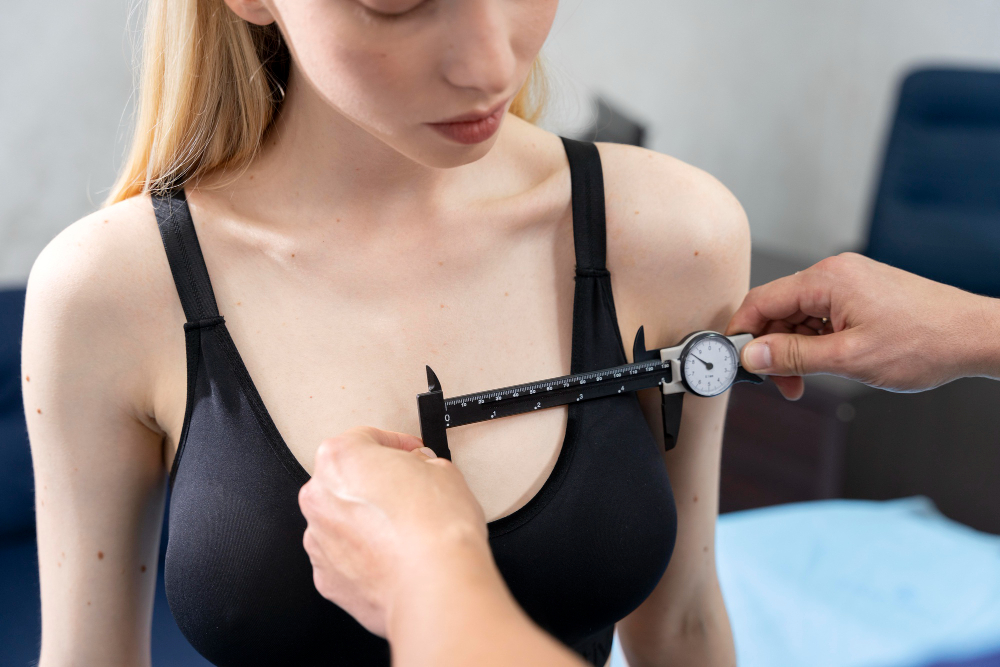
Breast Asymmetry Correction
Breast asymmetry is the condition where there is a difference in volume, shape, nipple position, or degree of sagging between the two breasts. It can range from mild differences to more severe structural abnormalities. Asymmetry correction surgery is a high-precision aesthetic procedure that combines different surgical techniques tailored to each breast’s anatomy.Who Has Breast Asymmetry?
- Congenital structural differences
- Underdevelopment of one breast during development
- Different effects on breasts after pregnancy and breastfeeding
- Different impact of weight changes on breasts
- After previous surgeries
- Tuberous breast deformity
- Tissue loss after trauma or infection
Types of Breast Asymmetry
- Volume Asymmetry: One breast is larger than the other
- Shape Asymmetry: One breast is rounder, while the other is cone-shaped
- Degree of Sagging Difference
- Areal and Nipple Position Difference
- Tuberous Breast-related Asymmetry
Surgical Planning
Asymmetry correction is one of the most planning-focused procedures in breast surgery. Different surgical techniques may need to be applied to each breast.Possible Combinations
- Implant in one breast, reduction in the other
- Mastopexy in one breast, implant in the other
- Lift in one breast, fat transfer in the other
- Different implant volumes in both breasts
- Lower pole release for tuberous breast
- Equalization of areola diameter and position
Pre-Surgery Preparation
- Breast ultrasound
- Symmetry measurements
- Implant volume planning
- Smoking cessation 2–3 weeks before surgery
- Adjustment of blood-thinning medications
Surgical Process
- General anesthesia
- Duration: 1.5–3.5 hours
- Separate surgical procedure for each breast as planned
- Continuous symmetry measurements throughout the procedure
Post-Surgery Recovery
- Return to daily life within 3–5 days
- Avoid heavy exercise for 4–6 weeks
- Wear medical bra
- Final symmetry achieved in 3–6 months
Possible Risks and Complications
Early Stage
- Hematoma
- Infection
- Stitch opening
- Skin circulation problems
Late Stage
- Minimal symmetry difference
- Implant position discrepancy
- Re-sagging
- Capsular contracture
- Widening of scars
Why Is a Perfect Symmetry Guarantee Not Given?
- The tissue structure of the two breasts is different
- Skin elasticity is not the same
- The healing process varies from breast to breast
Longevity of Results
- Results are generally long-lasting
- Pregnancy, weight changes, and aging can affect results
- Proper bra use increases longevity of results
Personalized Evaluation
Each patient has unique structural characteristics and expectations. Therefore, the treatment process is planned according to individual needs. A detailed examination and facial analysis determine the most suitable approach both aesthetically and functionally.
Advanced Diagnosis and Analysis
Comprehensive diagnostic methods are used to ensure the treatment process progresses correctly. Endoscopic examination, imaging techniques, and functional tests allow detailed evaluation of the nasal structure and help create a more accurate treatment plan.
Process Tracking and Support
All stages before and after the operation are carefully monitored. During the recovery period, regular check-ups, care recommendations, and personalized guidance ensure that the process continues in a healthy and comfortable manner.
F.A.Q
Is it possible to achieve perfect symmetry?
The highest possible symmetry is achieved, but 100% identical results are unrealistic because the human body is not completely symmetrical.
Is it normal to perform different surgeries on each breast?
Yes. The principle of asymmetry surgeries is to apply different procedures according to the needs of each breast.
Will it deteriorate again?
Weight changes, pregnancy, implant weight, and aging processes can cause changes in shape.
Is an implant necessary?
No. Implants are only added if there is a significant volume difference or if the patient wants fullness.
Is wearing a bra after surgery important?
Yes. A supportive bra is critically important for stable and symmetrical results.
Plan a safe and personalized consultation with Dr. Mert Okumuş. We are here to guide you through your aesthetic needs, facial analysis, surgical options, or any questions you may have. Fill out the form below to schedule your appointment.

If you have general questions about our services, treatment processes, or Dr. Mert Okumuş, you can reach us via email or contact us directly.
dr.mertokumus@gmail.com
Phone
+90 532 781 51 23